Battery Energy Storage Systems, Plainly Explained
Utility-scale batteries are now part of Michigan's grid plans. Here is what they are, why they are expanding, and the practical questions townships and residents should be asking.
New here? Start with the basics →
What battery storage is
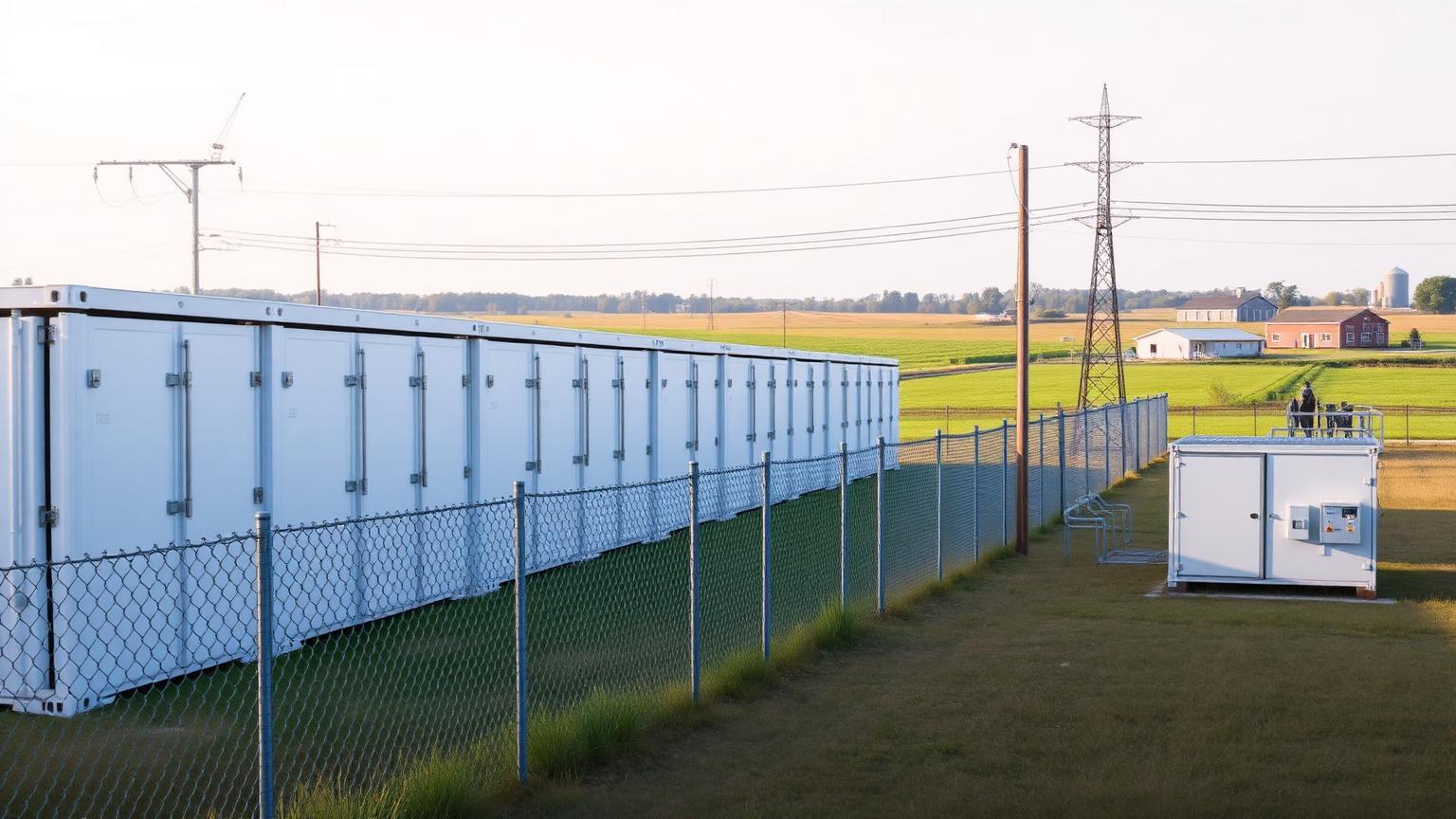
A Battery Energy Storage System (BESS) is a facility that stores electricity in large lithium-ion battery cells, then releases it back to the grid when needed. At utility scale, the equipment usually looks like rows of white container-style enclosures behind a fence, paired with transformers, inverters, and a small substation.
Storage does not generate electricity on its own. It shifts power in time — charging when supply is plentiful (often midday solar or overnight wind), and discharging during peak demand or when other generation drops off.
Why it is expanding in Michigan
In 2023, Michigan set a statewide energy storage target of 2,500 megawatts by 2029 under Public Act 235. In March 2026, the Michigan Public Service Commission approved six storage contracts totaling 1,332 MW — a major step toward that target.
The drivers are practical: more variable wind and solar on the grid, aging fossil generation coming offline, and rising peak demand from things like data centers and electrification. Storage is one of the tools utilities use to keep supply and demand balanced.
What residents usually worry about
- Fire safety. Lithium-ion battery fires are rare but real. They burn differently than typical structure fires and require trained response.
- Setbacks from homes. How close storage equipment can be sited next to residences, schools, or hospitals.
- Local zoning. Whether storage is treated as industrial use and which districts can host it.
- Water supply & access. Whether local fire departments have realistic access to water and equipment to respond.
These are legitimate concerns. They are also the kinds of concerns that good ordinance language and a credible Emergency Response Plan are designed to address — not dismiss.
Setbacks, fire safety, and emergency response
Modern BESS designs include multiple layers of safety: cell-level monitoring, thermal management, fire detection and suppression systems, and physical separation between battery enclosures to limit fire spread. Codes such as NFPA 855 and IFC Chapter 12 set baseline requirements for siting and safety.
Local ordinances typically layer on top of those codes by requiring:
- Minimum setbacks from property lines, dwellings, and sensitive uses such as schools.
- An Emergency Response Plan developed with the local fire department, including training and site familiarization.
- Fencing, signage, 24/7 remote monitoring, and clear shutdown procedures.
- Decommissioning bonds so equipment is removed at end of life.
How much land it uses
Compared with wind or solar, battery storage uses very little land. A 100 MW / 4-hour BESS site typically fits on a few acres — often fewer than 5 — including fencing, access, and the substation connection. Most of the visible area is enclosures, gravel, and equipment yards rather than buildings.
The siting question is usually less about acreage and more about where: proximity to existing transmission, distance from homes, and compatibility with the surrounding zoning.
What the law says in Michigan
Michigan's Public Act 233 of 2023 created a state-level siting process at the Michigan Public Service Commission for qualifying utility-scale energy facilities, including large battery storage projects above defined size thresholds. Smaller projects, and projects whose host community adopts a "compatible renewable energy ordinance," generally remain under local control.
For a deeper walkthrough, see our PA 233 explainer and the broader Law & Policy page.
What questions townships should ask
- What setbacks apply from property lines, homes, and sensitive uses, and how were they chosen?
- Has an Emergency Response Plan been developed jointly with the local fire department, and is training included?
- What battery chemistry and certifications are proposed (UL 9540, UL 9540A, NFPA 855)?
- How is the site monitored, who responds to alarms, and how fast?
- What does the decommissioning plan and financial assurance look like?
- Does the project go through PA 233 at the MPSC, or through local zoning — and what is the public input process either way?
Related: Data Centers in Michigan · Law & Policy · Sources