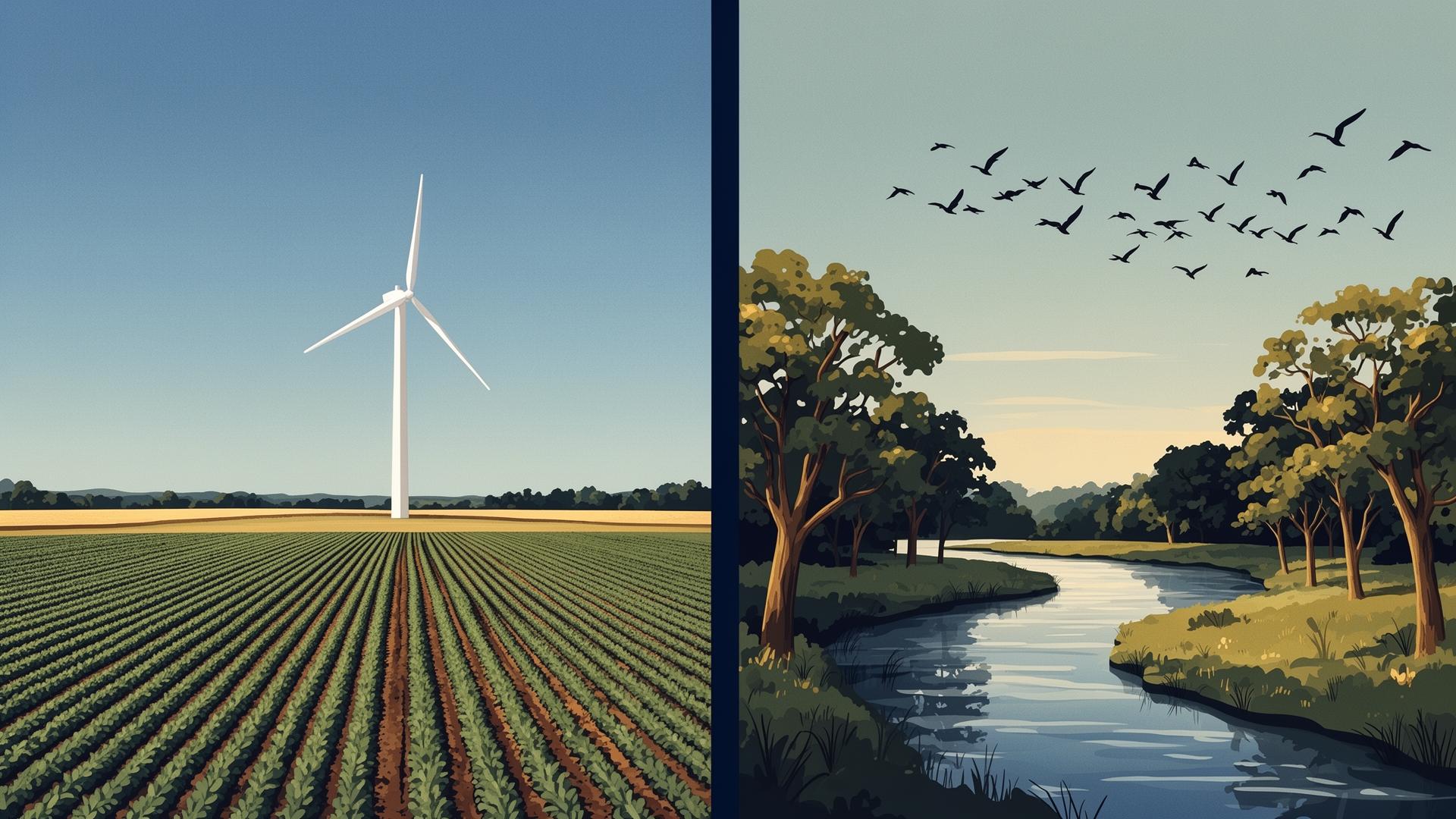
Wind Uses Very Little Land
A wind turbine looks big from a distance, but its physical footprint on the ground is small. Here is what that actually means for a Michigan farmer — plus the facts on noise, shadow flicker, and wildlife.
New here? Start with the basics →
Small physical footprint
A modern utility-scale turbine occupies roughly half an acre to one acre of ground when you add up the foundation pad, transformer, and gravel access road. The land in between turbines remains in active row crop or pasture production.
Farming continues
Combines, planters, and sprayers operate around turbines the same as around any other in-field obstacle. Drainage tile and field roads are usually preserved through negotiated lease terms — see the contract checklist for what to require.
Concentrated income
Unlike a solar lease that pays per acre across an entire field, wind income concentrates on a small number of host landowners. A farmer with one or two turbines can receive $20,000–$30,000 per turbine per year while continuing to farm essentially all of the surrounding land.
Noise and setback questions
Noise is one of the most common concerns raised about wind projects in Michigan. The practical question is usually not whether turbines make sound, but how much sound reaches nearby homes, what limits apply there, and how setbacks are used to reduce conflicts.
- Noise is usually regulated with measurable sound limits, often expressed in dB(A), together with setback requirements from homes or property lines.
- What matters most to nearby residents is the sound level at homes — especially nonparticipating homes — not the sound standing under the turbine itself.
- Ordinance details matter: stricter setbacks and lower noise limits generally leave more margin between turbines and nearby houses.
Most local disputes are really about siting standards, not about whether turbines are completely silent. The key questions are where the nearest homes are, what the ordinance requires, and how much compliance margin the project has built in.

Shadow flicker
Shadow flicker happens when the sun is low in the sky and rotating blades cast a moving shadow across a home or other building. It does not happen all day, and it depends on sun angle, distance, weather, and whether a building is actually in the shadow path.
- Michigan siting guidance has long treated shadow flicker as a standard part of wind review, often through a project-specific shadow flicker analysis.
- A commonly referenced ordinance approach is to limit shadow flicker on an occupied building to no more than 30 hours per year.
- Where models show a problem, mitigation can include turbine programming or temporary curtailment during the limited periods when flicker would affect a nearby home.
In plain English: shadow flicker is real, but it is also predictable. That means it can usually be modeled in advance and managed through siting, setbacks, and operating rules.
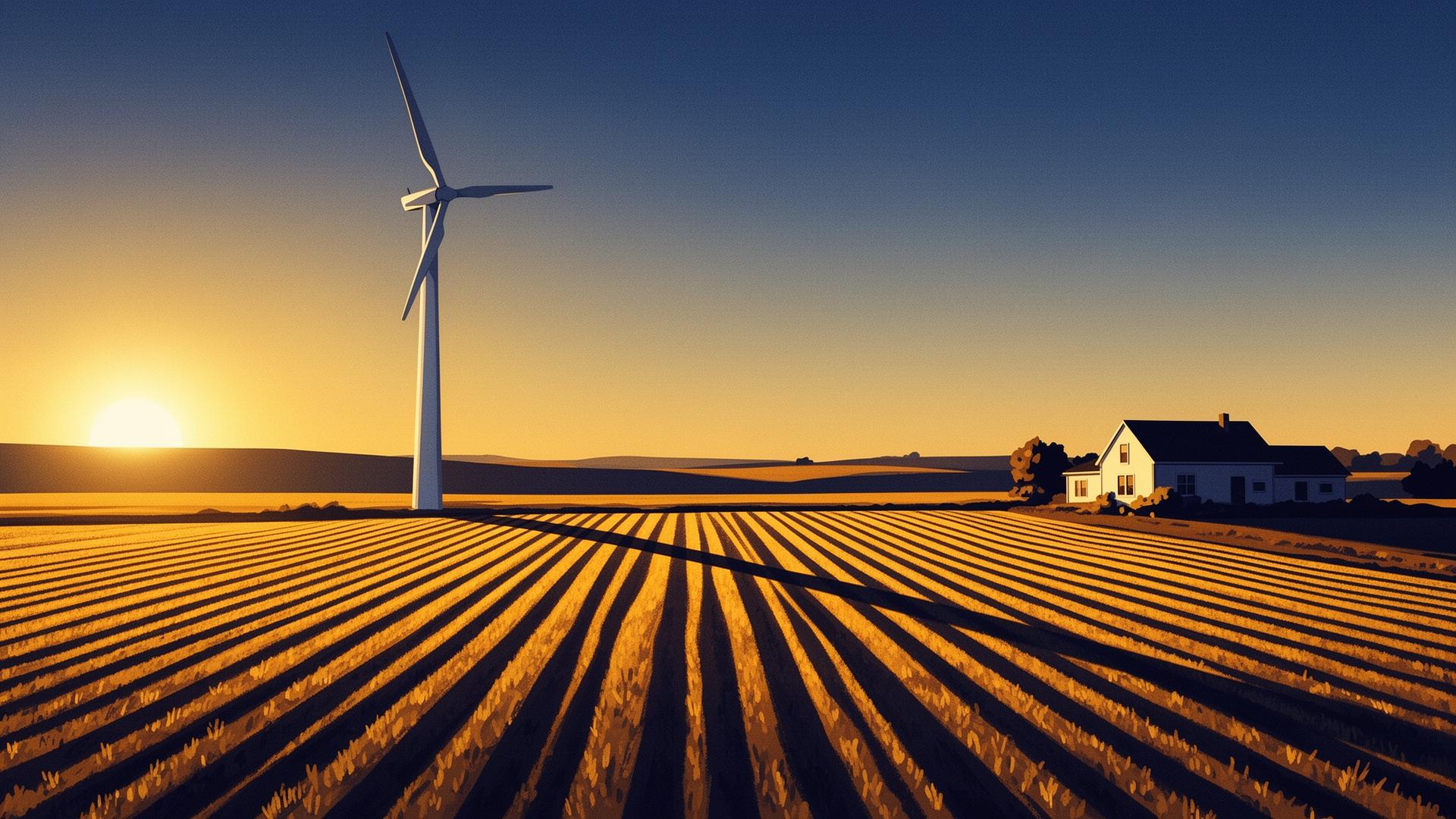
Wildlife impact
Wildlife impact is another real siting question, especially for birds and bats. The issue is not simply whether a turbine exists, but where it is placed relative to habitat, migration routes, roosting areas, and other wildlife movement corridors.
- Michigan wildlife guidance recommends avoiding high-activity areas, including locations near major bat hibernacula and important wildlife corridors.
- Siting matters because birds and bats are not distributed evenly across the landscape; some locations pose much higher risk than others.
- Operational steps can reduce risk too, including practices like feathering blades under certain wind-speed conditions in higher-risk bat areas.
So the practical wildlife question is not just “do turbines affect wildlife?” The better question is whether a project is being placed and operated in a lower-risk location, with the right setbacks, habitat awareness, and mitigation steps built in.